
GMP Microbial Identification & Investigation Support
One isolate. More than one way to find the answer.
Microbial identification is not simply a name on a report. It can help connect a recovery to personnel, water, raw materials, facility surfaces, process interventions or a recurring contamination source.
- GMP-focused laboratory
- Bacteria, yeast and mold
- Routine IDs and investigations
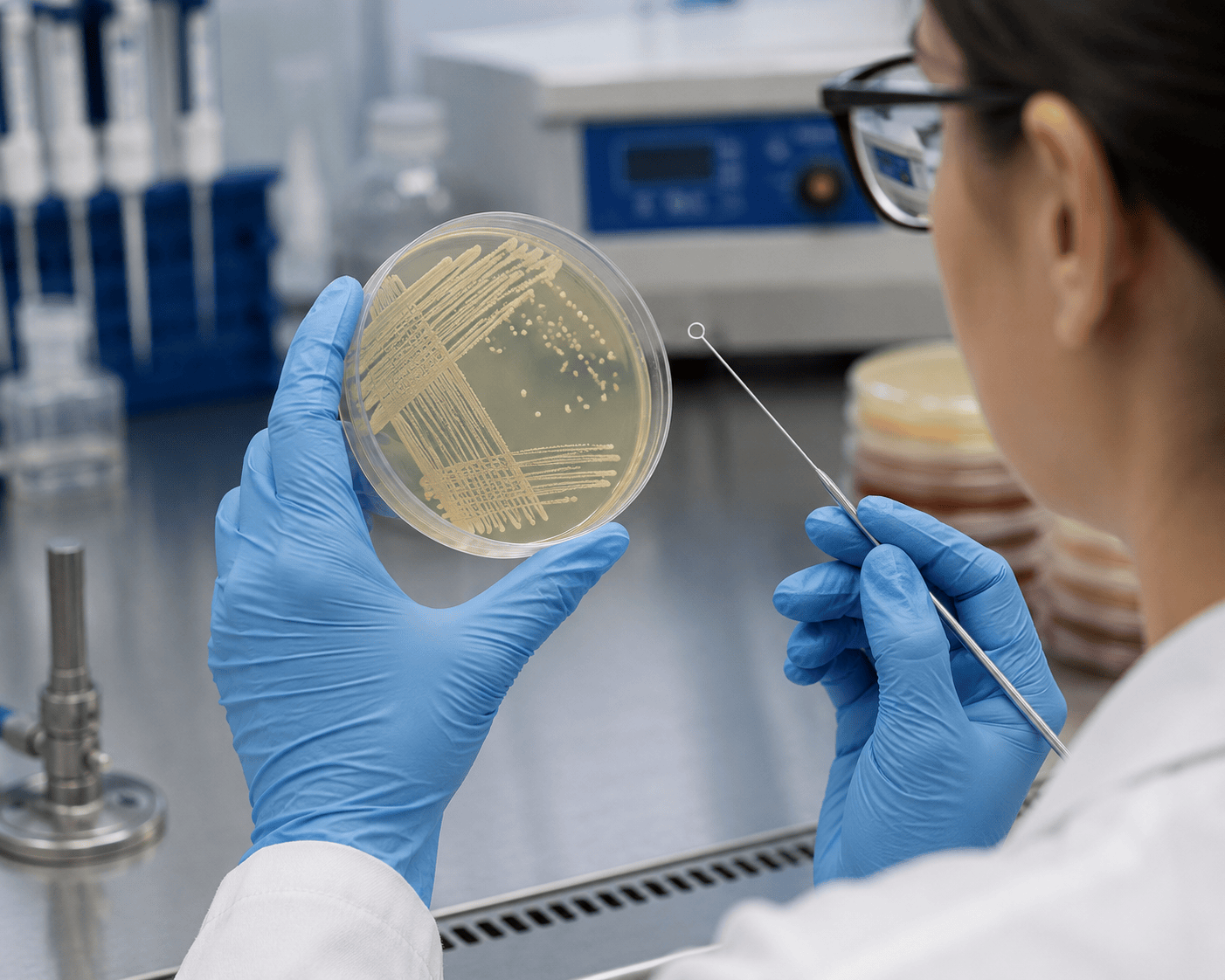
Complementary identification pathways
The right method for the organism and the question.
Each system contributes a different type of information. Using more than one identification pathway gives PlumGXP greater flexibility when a routine result is inconclusive, an organism is unusual or an investigation requires additional resolution.
MALDI-TOF Identification
Protein-profile analysis supports rapid identification of many routinely recovered bacteria and fungi using a reference-library comparison.
- Efficient identification of routine environmental and product isolates
- Faster information to support investigation decisions
- Strong fit for recurring, trending and monitoring programs
MicroSEQ Genetic Identification
Sequence-based identification provides an additional pathway for isolates requiring greater taxonomic resolution or evaluation beyond a routine protein-profile result.
- Useful for unusual or difficult-to-identify isolates
- Provides an independent identification approach
- Supports escalation when additional resolution is scientifically justified
Multiple systems create a stronger identification program.
The objective is not to run every isolate on every system. It is to have options. PlumGXP can begin with the pathway appropriate for routine identification and escalate when the organism, result or investigation warrants another approach.
Where was the organism recovered?
Identification interpreted in context.
Select a source to see how identification can support the next decision.
Environmental and personnel monitoring
Understand what the recovery may indicate about facility control.
Identification can help evaluate associations with personnel, gowning, cleaning, facility materials, room use, interventions and recurring locations. The organism identity becomes more meaningful when reviewed with recovery history and sampling context.
- Personnel and facility-source assessment
- Recurring-isolate and location trending
- Targeted investigation and resampling decisions
From isolate to insight
A clear, scientifically guided workflow.
- 01
Submit
Provide the isolate with its source, recovery date, medium and relevant project information.
- 02
Evaluate
PlumGXP reviews organism growth, purity, sample history and the intended use of the result.
- 03
Identify
The identification pathway is selected and additional resolution is considered when warranted.
- 04
Interpret
Results can be connected with location, process, historical trends and investigation questions.
More than an identification report
Support for the decision that comes next.
PlumGXP supports pharmaceutical, biotechnology, cell and gene therapy, medical device, and compounding organizations with microbial identification that can stand alone or connect with a broader monitoring, testing or investigation program.

Routine Programs
Identification and trending for environmental, water, product and utility monitoring.
Unexpected Results
Prompt scientific communication and contextual review when a recovery requires attention.
Recurring Organisms
Review organism history, recovery locations and patterns that may indicate a persistent source.
Disinfectant Studies
Support selection of representative resident isolates for facility-specific efficacy studies.
Frequently asked questions
Planning an identification?
A second pathway may be appropriate when the initial result is inconclusive, the organism is outside the reference library, closely related organisms require additional differentiation or the investigation needs greater resolution.
Yes. The most useful submission includes the isolate source, medium, incubation conditions, recovery date and relevant sample or location history so the result can be understood in context.
Identification is an important investigative tool, but an organism name alone does not prove its source. Source assessment should also consider recovery location, process activities, personnel, facility conditions, historical data and other evidence.
Yes. Identification can be incorporated into environmental monitoring, water, product, utility, disinfectant-efficacy and investigation programs using client-defined or scientifically justified criteria.
Confidence beyond the colony count