
Routine environmental monitoring
Your cleanroom is always telling you something.
Routine environmental monitoring is more than a compliance checkpoint. When sampling is designed well and the data are interpreted in context, your program can reveal changes in personnel behavior, cleaning, materials, equipment, airflow and facility control.
- Onsite sampling
- Laboratory analysis
- Microbial identification
- Trending and investigations
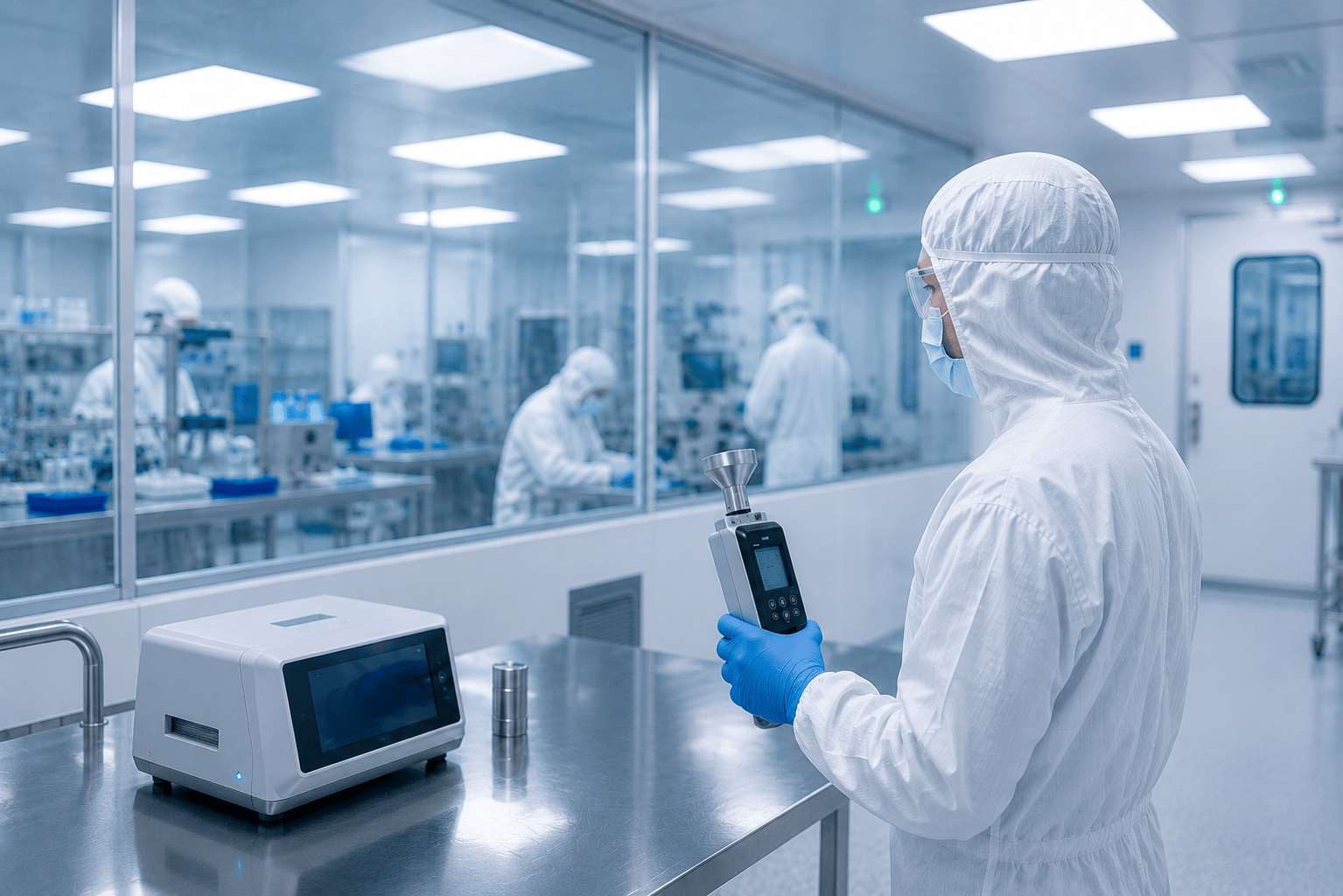
Look beyond the count.
A result becomes more useful when it is connected to where, when, how and by whom the sample was collected.
Qualification to continued control
Let the EMPQ inform the routine program.
EMPQ data should be evaluated with process risk, airflow, interventions and facility use to establish a routine program that asks the right questions—not simply repeats every qualification location forever.
Choose meaningful sites
Focus on critical operations, personnel interaction, material movement, equipment and locations where contamination could affect the process.
Select the recovery strategy
Use EMPQ recovery information and method suitability to support appropriate media, incubation conditions and sampling methods.
Define the depth of review
Establish routine, periodic and event-driven analysis—including which isolates are identified, what trends are reviewed and when escalation occurs.
What might your data be signaling?
The number is only the beginning.
Tap each card to see how routine EM can help focus attention on operational changes that are otherwise easy to miss.
Choose the analytical lens
Different questions require different views of the same data.
Filter the cards to see how a layered review can turn routine results into actionable information.
Compare critical sites, supporting areas, transfer points and recurring hotspots.
Review by shift, campaign, batch duration, intervention and occupancy condition.
Connect recoveries to cleaning events, agent preparation, shutdowns and repairs.
Evaluate individual and team recovery patterns without losing event context.
Compare results with movement, technique, material handling and critical manipulations.
Use post-training performance and recurrence to assess whether actions worked.
Distinguish personnel-, water-, material-, surface- or environment-associated organisms.
Watch for persistent or recurring isolates and changes in the facility profile.
Track frequency, location, organism type and shifts—not only excursions.
Image-supported colony counting
Every count can be supported by the plate image.
PlumGXP uses the Scan 300 automatic colony counter to improve the consistency, speed and documentation of environmental-monitoring plate evaluation. The system counts colonies and captures a digital image of the plate, giving the analyst and quality reviewer visual evidence alongside the reported result.
Automated detection helps reduce variability associated with repetitive manual counting, while retaining scientist review.
The image can be retained with sample information, comments, date, time and the counting session.
Analysts can review the detected colonies and make documented manual adjustments when scientifically justified.
Archived images help support result review, recurring-recovery assessment, client discussions and investigations.
Technology supports the decision—it does not replace scientific judgment. Colony counting and plate imaging do not identify the microorganism. Significant, unusual or recurring recoveries are evaluated for identification using an appropriate method.

Trending that supports decisions
A passing result can still belong to an adverse trend.
Reviewing only alert and action excursions can miss recurring low-level recovery, increasing recovery rates, changing flora or localized patterns. Trending should be appropriate to the operation and capable of looking across multiple dimensions.
- Location, room and cleanroom classification
- Operator, gown site, shift and activity
- Viable, nonviable and personnel results
- Organism identity and recurring isolates
- Recovery frequency, counts and adverse shifts
- Season, cleaning, maintenance and facility changes
The goal: recognize loss of control early enough to investigate the change, focus remediation and confirm that corrective actions are effective.
Investigation-ready monitoring
Your EMPQ plan can become an investigation map.
When contamination is recovered, the qualification sampling plan provides a broader set of scientifically selected locations that can support targeted resampling and help determine the possible extent of an event.
Focus the investigation
- Map the recovery location and adjacent operations
- Review personnel, interventions and material movement
- Compare environmental, personnel and utility data
- Review cleaning, maintenance and facility changes
- Use historical results and EMPQ locations to define follow-up
Move toward remediation
- Identify recovered organisms when scientifically appropriate
- Evaluate organism type and likely ecological associations
- Search for the same or related organism across time and location
- Develop focused resampling or recovery activities
- Verify whether corrective actions return the area to control
Microbial identification and resident flora
Know not only how many—but what keeps returning.
Colony morphology can help categorize recoveries, but it does not replace identification. Tracking significant, unusual and recurring organisms provides a deeper view of the cleanroom ecosystem and helps investigators narrow possible sources.
Resident microorganisms can also support facility-relevant disinfectant efficacy studies performed in alignment with USP <1072>, connecting routine monitoring to the cleaning and disinfection program.
Recognize change
Detect new organisms, increasing diversity or a shift in the dominant facility flora.
Trace recurrence
Compare organisms across personnel, rooms, equipment, utilities and historical events.
Test remediation
Use representative facility isolates to help evaluate whether disinfectants address organisms actually recovered onsite.
Your Level
of Support.
Environmental monitoring built around your team
PlumGXP can change its level of service as your program evolves.
Start with the support you need now. As your personnel, laboratory and equipment become ready, PlumGXP can train your team and help transition appropriate activities in-house without losing continuity in the monitoring program.
Full-Service Execution
PlumGXP provides onsite sampling, equipment, media and materials, followed by incubation, analysis, microbial identification and reporting.
PlumGXP-Equipped / Client-Sampled
We supply qualified equipment, media, materials and instructions. Your trained personnel collect the samples and return them to PlumGXP for incubation, analysis, identification and reporting.
Client-Equipped / PlumGXP-Analyzed
Your personnel use your qualified equipment, approved materials and procedures to sample. PlumGXP receives the samples for incubation, analysis, identification and reporting.
Ready to bring testing in-house? PlumGXP can support sampling and equipment training, method and workflow transfer, documentation development, competency assessment and a controlled handoff—while remaining available for overflow, identification and investigation support.
Turn routine monitoring into useful control information.
Build a program that connects the sample, the organism, the process and the decision.